Real Assets
We build future energy systems and resilient infrastructure, backing emerging opportunities in technology, land and water.


2026/27 is the first tax year in over 20 years in which upfront income tax relief on VCTs is 20% rather than 30%1. Advisers are understandably reassessing where VCTs fit, and there is a lot to consider.
VCTs have become a mainstay of planning for income and growth, raising an average of around £980 million a year over the past five tax years2. That maturity may limit any fall in demand. But there is no denying that the balance of risk and reward has shifted.
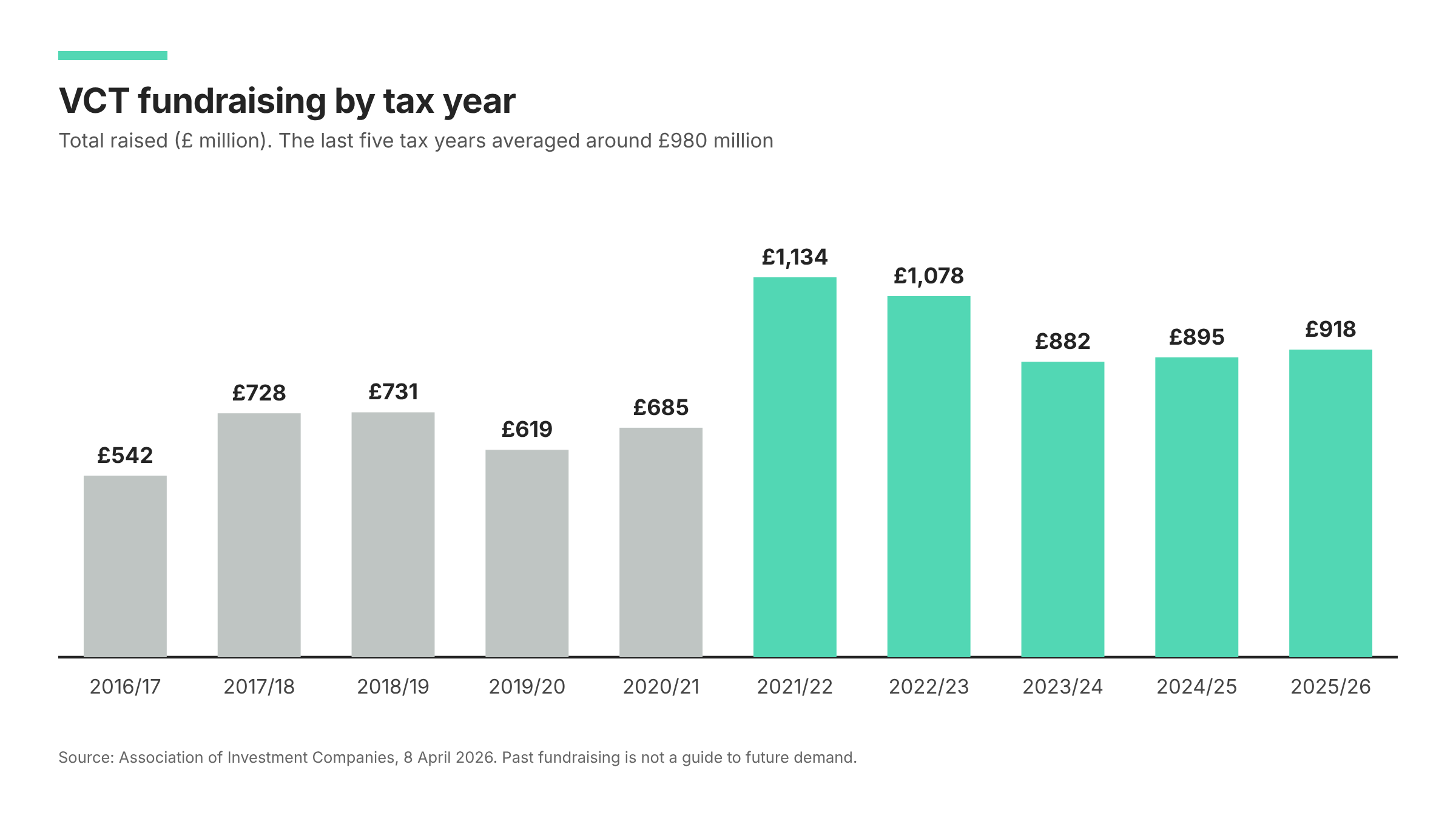
The most obvious concern is a drop in inflows. When fundraising falls, VCT managers tend to prioritise liquidity commitments to shareholders and follow-on funding for existing investee companies. New investment activity usually slows as a result.
In practice, capital may become more concentrated in existing portfolios. That strengthens the case for diversifying across VCTs, and for a more considered approach to manager selection. Because different VCTs can hold the same companies, sectors and business types, detailed analysis of the underlying holdings matters more than ever.
We expect a flight to quality: established managers with stronger long-term returns, larger cash reserves, greater liquidity and a record of navigating difficult markets. Investment discipline, follow-on capacity and how each VCT complements the wider allocation all deserve close scrutiny. The aim is not simply to pick the largest VCTs, but to understand what each one holds and what role it plays for the client.
Specialist VCTs can complement a generalist allocation by adding different sectors, stages of growth or return drivers. In this environment, however, smaller and younger VCT managers are likely to find fundraising much harder, particularly when less money is being invested overall. It’s easy to see why some advisers are reluctant to carry the regulatory or reputational risk of smaller VCTs with less experienced managers.
Even so, a specialist VCT may suit some clients. A genuinely specialist manager can offer higher growth potential than a generalist with small allocations across many sectors, particularly in technology, where deep knowledge is needed to identify the best opportunities. The most attractive option is likely to be an experienced manager with access to specialist expertise and the resources to weather a difficult fundraising market. This route will generally suit experienced, higher-net-worth clients who are comfortable with greater risk.
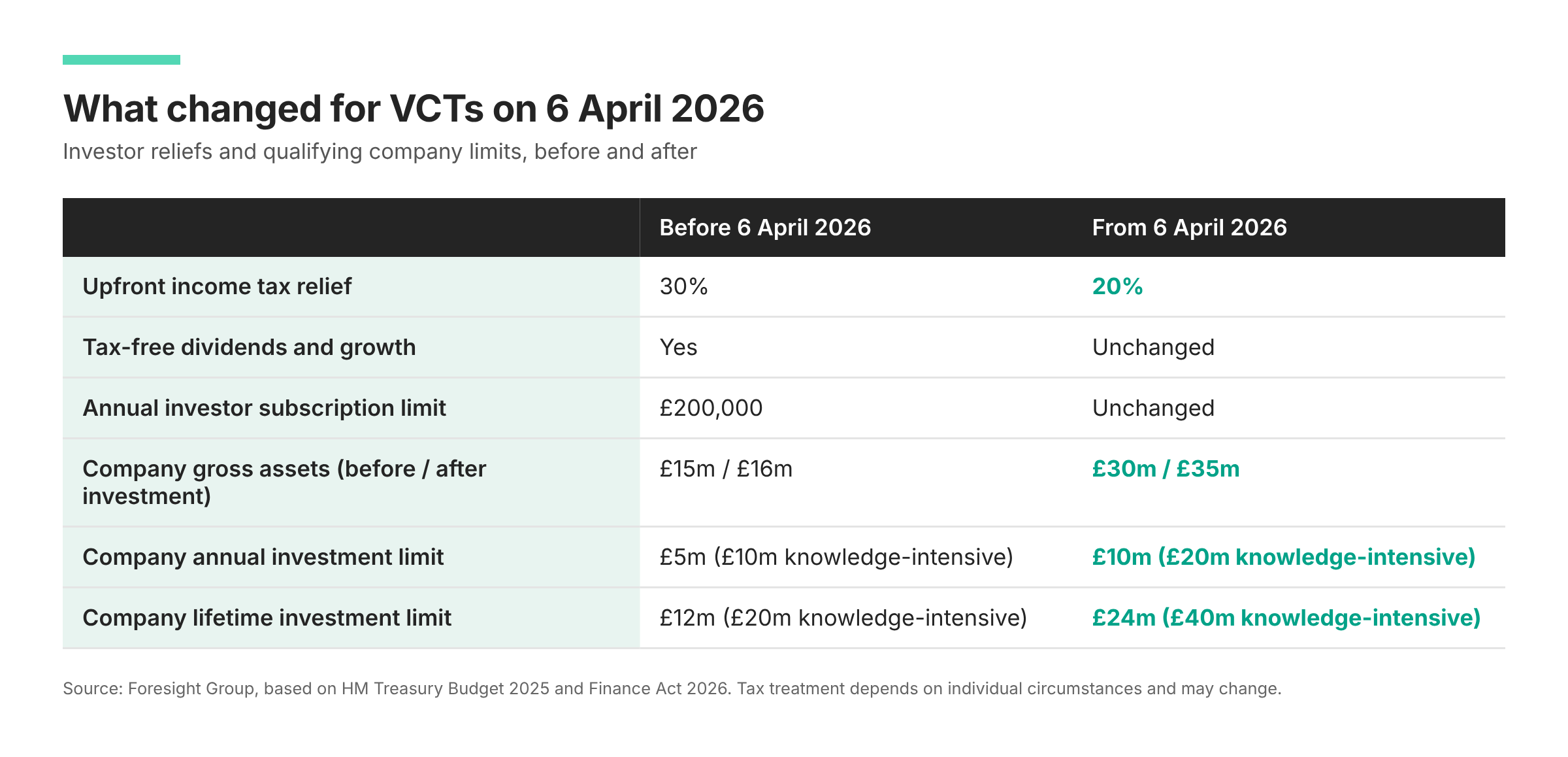
Tax-free income is increasingly hard to find. The Office for Budget Responsibility expects frozen thresholds to create 4.8 million more higher-rate taxpayers by 2030/313, HMRC estimated that cuts to the capital gains tax annual exempt amount would bring around 260,000 people and trusts into the tax for the first time4, and from April 2027 unused pensions will fall within the estate for inheritance tax (IHT). For many clients, those pressures may outweigh the loss of 10 percentage points of relief.
The other April 2026 change works in VCTs’ favour. The limits on the companies VCTs can back have doubled, which should allow managers to invest in larger, better-funded businesses and to support successful companies for longer as they scale.
Performance is also part of the conversation. The average generalist VCT delivered a total return of 51.9% over the ten years to 30 June 2026, although returns varied widely between managers5. Past performance is not a guide to future performance.
There will be situations in which a VCT is unlikely to be the right answer:
The 2026/27 changes demand the full attention of advisers and their clients. Portfolios may need adjusting, but a mature VCT market in a high-tax environment is likely to remain appealing to many.
For more support on preparing clients for the changes, or to discuss how our solutions can support your planning approach, our team is ready to help. Book a meeting with your local BDM.
This article is issued by Foresight Group LLP (“Foresight”) which is authorised and regulated by the Financial Conduct Authority (“FCA”) under firm reference number 198020 on 8 October 2026. Foresight’s registered office is at The Shard, 32 London Bridge Street, London, SE1 9SG. This article has not been approved as a financial promotion for the purpose of Section 21 of the Financial Services and Markets Act 2000 (“FSMA”).
This article is intended for financial advisers and for information purposes only, and does not create any legally binding obligations on the part of Foresight. Without limitation, this article does not constitute an offer, an invitation to offer or a recommendation to engage in any investment activity. The information contained in this article is based on material we believe to be reliable. However, we do not represent that it is accurate, current, complete or error free. Assumptions, estimates and opinions contained in this document constitute our judgement as of the date of the document and are subject to change without notice. Opinions expressed by third parties are their own and do not necessarily reflect the views of Foresight.
Capital is at risk. The value of an investment, and any income from it, can fall as well as rise and investors may not get back the full amount they invest. Venture Capital Trusts (“VCTs”) should be considered longer-term investments and may be higher risk and more difficult to realise than an investment in listed securities. Investments will be made in small unquoted companies, which carry a higher risk than many other forms of investment. These investments will be illiquid and may expose you to a significant risk of losing all of the money you invest. VCTs usually trade at a discount to their net asset value.
Tax reliefs are dependent on the VCT maintaining its qualifying status and on investors’ individual circumstances. Current tax rules are subject to change. If a VCT loses its qualifying status, tax advantages will be withdrawn from that point. Foresight does not provide financial, legal, investment or tax advice. Past performance is not a guide to future performance and may not be repeated. Please see the relevant offering documents for full details where attention should be paid to the risk factors set out.