

Real Assets
We build future energy systems and resilient infrastructure, backing emerging opportunities in technology, land and water.
Fergus Witt, Sustainability Manager, reflects on how active investing can support a more circular and sustainable economy.

A sustainable economy needs to work within nature’s limits. Earth Overshoot Day marks the point in the year when humanity’s demand for ecological resources exceeds what the Earth can regenerate in that year. This year it falls on 30 July; however, across the developed world, national overshoot days are being passed even earlier, with the UK’s falling in May1. It is a stark reminder of the pressure placed on natural systems, but also an opportunity to focus on practical solutions. Across Foresight’s portfolio, companies and assets are helping to improve resource efficiency, reduce waste, and build resilience - demonstrating how active investing can support a more circular and sustainable economy.
Reducing pressure on natural resources starts with using energy more efficiently and managing infrastructure for the long term. Across renewable energy assets, this means proactive maintenance, lifecycle planning and targeted interventions that help assets adapt to a changing climate and build resilience over time. For example, across our UK solar sites, cooling fans have been installed alongside other mitigation measures to help manage the impact of rising temperatures on energy generation.
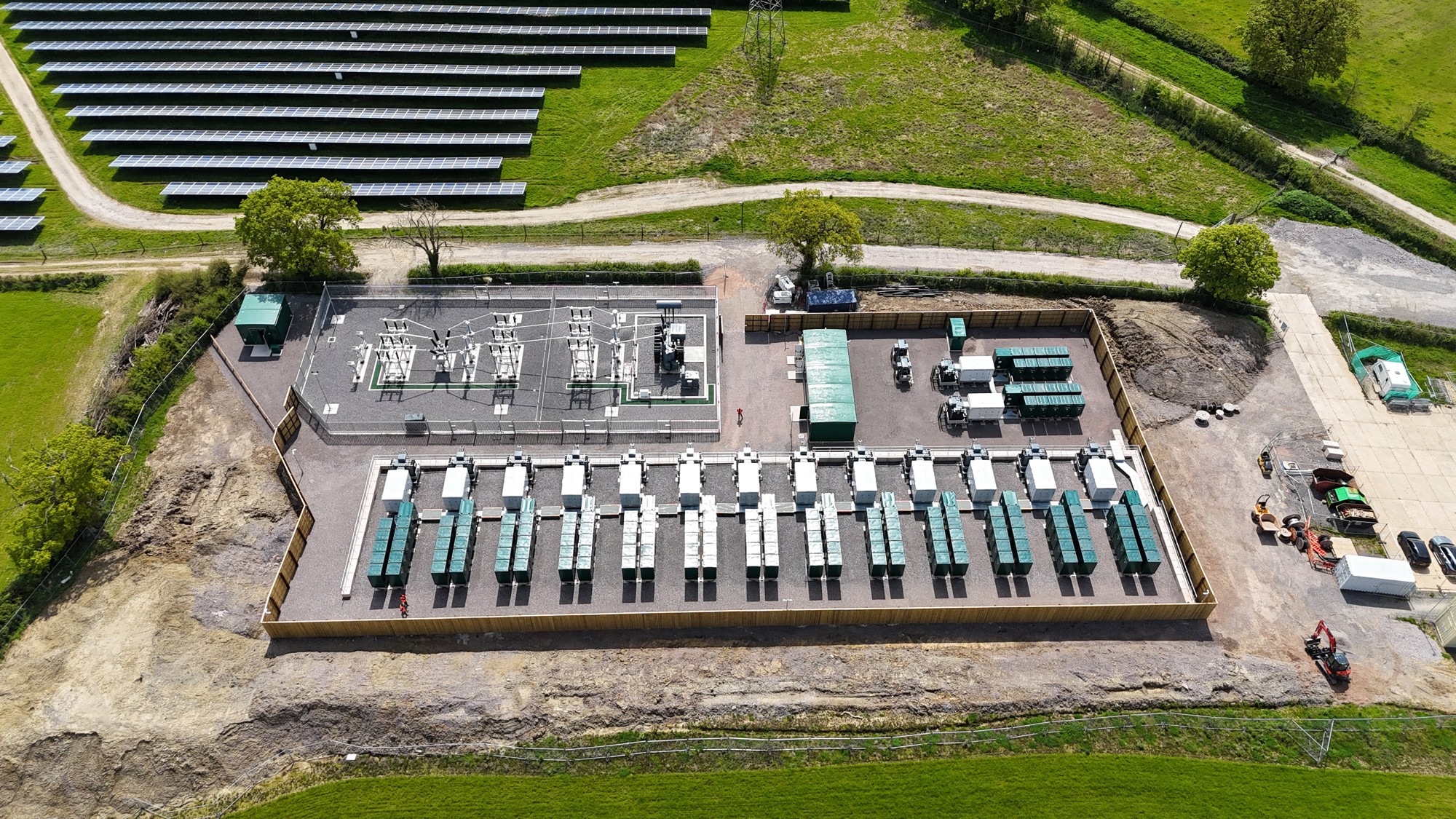
At grid level, improving efficiency requires more flexibility in power systems, with battery energy storage systems (BESS) playing a critical role. By storing electricity when renewable generation exceeds demand and releasing it when demand rises, BESS can help balance supply and demand, reducing curtailment and improving grid resilience. The UK Government’s Clean Power Action Plan estimates that 23–27GW of battery storage will be needed by 2030, up from 4.5GW in 2024, highlighting the need for continued progress on planning, grid connectivity and enabling infrastructure2. Across Foresight’s portfolio, we currently have 13 operational BESS facilities, with seven in our pipeline, demonstrating our role in developing the storage infrastructure needed for a future-ready power system.
Emerging technologies can also help homes and businesses use energy more intelligently. Mixergy is a portfolio business within the Foresight Technology VCT. The company develops internet-connected smart hot water cylinders for social housing, residential and commercial buildings. Its technology heats only the water required and can be programmed to take advantage of off-peak electricity tariffs, delivering a more managed energy usage which can lower energy bills and support carbon emissions reductions. Its technology has been recognised externally, including through receiving Innovation of the Year at the Unlock Net Zero Awards and The King’s Award for Enterprise Innovation, showing the clear progress made by the business since Foresight first invested in 2019.
A more circular economy depends on moving beyond a “take, make, dispose” model to keeping materials, nutrients and by-products in productive use. Within our UK and EU solar portfolios, this includes compliance with Waste Electrical and Electronic Equipment (WEEE) regulations, which promote the recovery, reuse and recycling of end-of-life solar panels and their components. At our Kölvallen wind farm in Sweden, which began operations in 2025, the construction utilised recycled reinforced steel alongside on-site gravel sourcing and concrete batching. This delivered a 54% reduction in the CO₂ emissions from what would normally have been expected from a project of this scale.
In agriculture, regenerative approaches can help to close resource loops by restoring soil health, improving water retention, reducing reliance on synthetic inputs and reusing organic matter. With 2 million hectares of soil in England and Wales at risk of erosion, regenerative practices can positively contribute to improving soil health3, water retention and supporting a more resilient agricultural system. Within our Natural Capital portfolio, our participation in the Regenerate Outcomes programme provides land managers across 12,400 hectares with training on best-practice regenerative farming techniques, providing a framework for protecting soil and enhancing crop performance4. These approaches demonstrate how responsible asset management can support more circular, resilient food systems while helping to protect nature.
Protecting and restoring nature requires investment in solutions that improve the way land, crops and ecosystems are managed. Within our Private Equity portfolio, this includes companies developing nature-focused technologies. Zayndu’s seed-priming technology uses cold plasma to support stronger germination, plant health and crop performance without artificial chemical residues5. Bloemteknik’s horticultural lighting solutions help growers improve productivity in controlled environments while reducing unnecessary energy use6. Both companies recently undertook successful trials with the Eden Project, with the outputs informing potential areas for future collaboration.
Within Natural Capital, land management provides a practical route to supporting long-term environmental outcomes. Through applying different management strategies based on site-specific characteristics we can strengthen ecosystem resilience and protect key habitats, whilst being sensitive to community concerns of changes to local landscapes. We seek to balance outcomes, combining productive conifers with broadleaf species and native planting to create healthier and more resilient woodland environments.

Earth Overshoot Day should prompt reflection not only on the scale of the challenge, but on the practical choices needed to address it. For Foresight, this means investing in businesses and assets that make better use of resources, protect natural systems and support the transition to a more circular economy. Through investment and active ownership, we can help turn awareness into action, delivering solutions that make efficient use of natural resources while creating long-term value for our clients.
This article has been issued on the 29/07/2026 by Foresight Group LLP (“Foresight”) which is authorised and regulated by the Financial Conduct Authority, under firm reference number 198020. Foresight’s registered office is The Shard, 32 London Bridge Street, London, SE1 9SG. This article has not been approved as a financial promotion for the purpose of Section 21 of the Financial Services and Markets Act 2000. Without limitation, this article does not constitute an offer, an invitation to offer or a recommendation to engage in any investment activity. Foresight does not provide financial, legal, investment or tax advice. The information contained in this article is based on material we believe to be reliable. However, we do not represent that it is accurate, current, complete or error free. Assumptions, estimates and opinions contained in this article constitute our judgement as of the date of the article and are subject to change without notice.


You have viewed 0 of 0


