Real Assets
We build future energy systems and resilient infrastructure, backing emerging opportunities in technology, land and water.

Dear Prime Minister,
Your ambition to deliver the largest council housebuilding programme since the post-war era is both welcome and necessary. Britain urgently needs more affordable homes, and while politicians across the political spectrum have long highlighted the scale of the housing shortage, a fundamental question remains: how will we deliver them?
I would argue that a significant proportion should be constructed from homegrown timber. Not because it is fashionable, nor because it offers environmental benefits, but because it arguably represents one of the clearest examples of joined-up policy making.
Win 1: Homegrown Timber, Stronger Britain
Britain currently imports around 80% of the timber it consumes and remains the world's second-largest net importer of timber after China[1]. This leaves us heavily exposed to global supply chain disruption and geopolitical uncertainty. This dependence and resilience challenge has been a recurring theme in Foresight's recent work in Natural Capital.
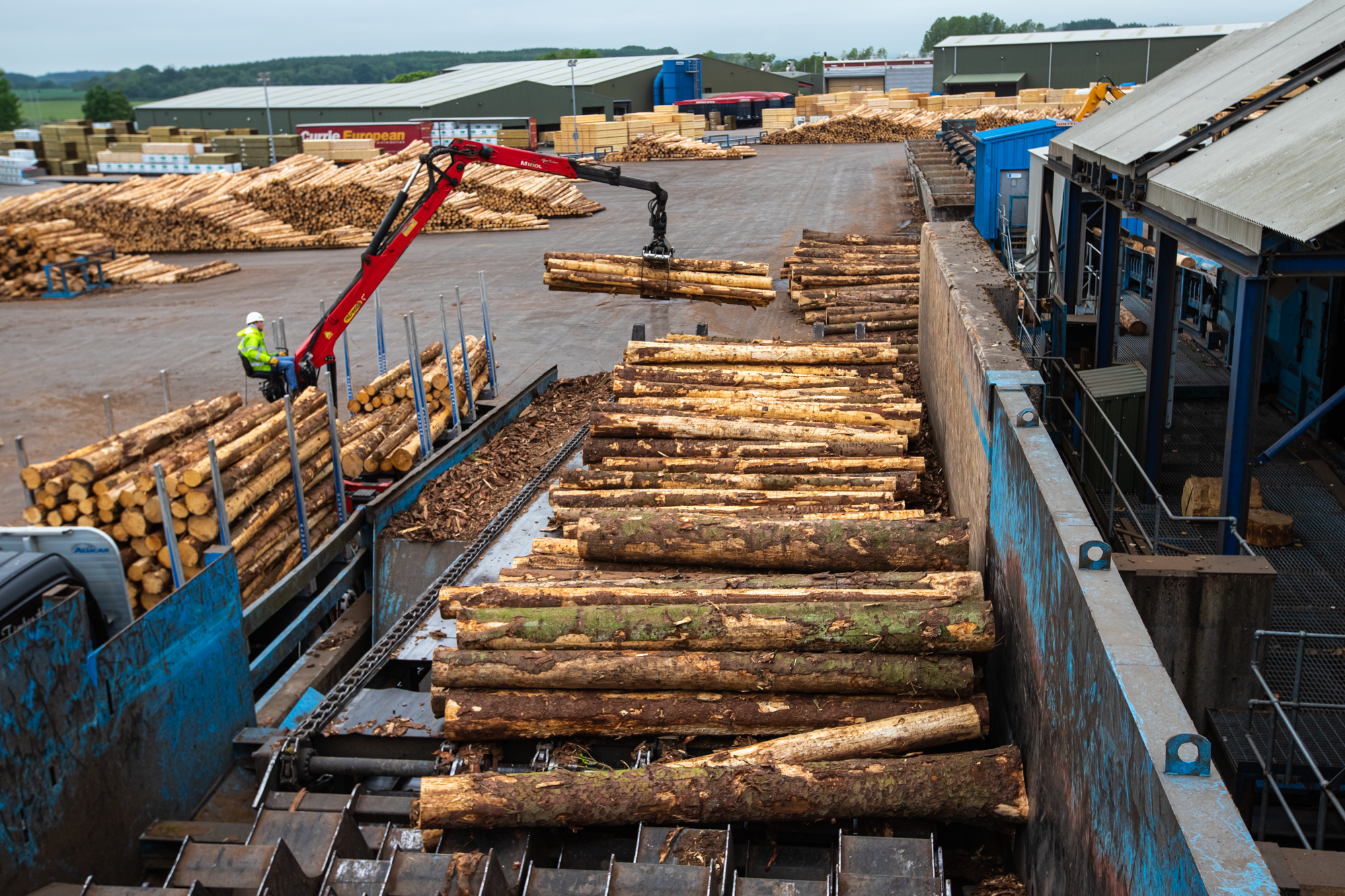
A long-term pipeline of timber-based public housing would help to change the equation. It would create more predictable domestic demand for timber. That demand would support increased domestic woodland creation, encourage investment into productive forestry and strengthen the economic case for planting more trees.
The homes of the 2040s could be built from trees planted in the 2020s. The opportunity is present, but only if national forestry policy is aligned with housing policy.
Win 2: Timber-Rich Homes, Better Health
A home should be more than a place to live. It should be an environment that supports health, wellbeing and thriving communities.
Peer reviewed research suggests that timber-rich environments may support wellbeing and reduce stress. Studies have found evidence linking visible wood in buildings to physiological relaxation and positive cognitive outcomes[2].
This matters because the communities living in low-quality social housing often experience poorer physical and mental health outcomes[3]. We should not settle for simply delivering homes as cheaply as possible. We should strive to create homes that support physical health, mental wellbeing and quality of life.
Win 3: Timber Construction, Faster Delivery
If the objective is to deliver more council housing soon, timber has another major advantage: speed.
Modern timber-frame techniques can significantly reduce construction times compared with traditional building methods[4]. That matters because every government promises more homes. Yet, few achieve the numbers they set out to deliver.
If Britain is serious about a post-war scale council housebuilding programme, then construction methods that enable faster, more efficient delivery should form part of the solution. Simply put, if we want to build more homes, more quickly, timber can help get us there.
Win 4: Carbon-Storing Timber, Sustainable Growth
Buildings are responsible for a significant share of global carbon emissions, largely due to the carbon-intensive nature of steel and concrete[5]. Timber offers a different model.
Trees absorb carbon as they grow and continue to store that carbon throughout the life of the building. Timber-framed homes can become long-term carbon reservoirs rather than another source of embodied emissions.
A major council housebuilding programme therefore presents an enormous opportunity. Rather than adding to Britain's carbon footprint, we could be building homes that actively lock carbon away for decades. The post-war generation built council homes from concrete and steel. This generation should build them from carbon.
Win 5: British Timber, British Jobs
Perhaps most importantly, a Homes from Homegrown Timber strategy would not just grow trees. It would grow industries.
The real opportunity is not simply planting more forests. It is rebuilding Britain's timber supply chain through sawmills, engineered timber manufacturing, modular construction facilities and modern methods of construction.
Every pound spent on imported materials supports jobs overseas. Meanwhile, every pound spent on homegrown timber supports UK jobs. Forestry jobs. Sawmill jobs. Manufacturing jobs. Construction jobs. Jobs throughout the entirety of the nation which bring growth to local and rural communities.
A large-scale council housing programme could become one of the most powerful regional growth initiatives Britain has seen in decades.
The French precedent
And perhaps the strongest argument of all is that this is not an untested idea. In 2020, France announced plans to increase the use of wood in new state-funded public buildings. France recognised that public procurement can be used to accelerate industrial development, reduce emissions and create new markets. The policy has helped elevate the role of timber and bio-based materials in public construction, with examples including arenas developed for the 2024 Paris Olympics[6].
At what cost?
Critics once argued that all of this sounds desirable, but that lower-carbon construction comes at a higher cost. That assumption has run up against recent events. Rising energy prices, geopolitical instability, and supply chain volatility have pushed up the cost of carbon-intensive materials such as steel and cement, prompting a reassessment of traditional building methods[7].
This presents a rare opportunity: to build homes faster, support British manufacturing, strengthen timber security, create new forests and store carbon, all without guaranteeing increased costs for taxpayers.
Too often, economic growth and sustainability are presented as competing priorities. Here, they can reinforce one another.
To conclude
Prime Minister, this programme can be more than a housing policy: it can also be a forestry, industrial, health, resilience and growth strategy.
Build homes. Grow forests. Create jobs. Enhance lives. The result could be one of the most compelling examples of joined-up government, Britain has seen in a generation.
The opportunity is clear. The economics are increasingly compelling. With the right policy choices, Britain can deliver homes, jobs, forests, resilience and lower-carbon growth through a single national programme. I would welcome the opportunity to discuss how this ambition can be turned into practical policy.
Yours sincerely,
Richard Kelly, Managing Director, Foresight
[1] Forestry Commission Blog - Celebrating the timber in our lives
[2]The influence of wooden interior materials on indoor environment: a review” by Tuomas Alapieti, Raimo Mikkola, Pertti Pasanen & Heidi Salonen.
[3]Housing and health in local strategic health planning - GOV.UK
[4] Methods of Construction to Meet the Housing Crisis in the UK Residential Sector: A Comparative Study between Timber Frame and Masonry Construction — Birmingham City University / MDPI Buildings, 2022.
[5] The UN Environment Programme: Building materials and the climate, constructing a new future (2023)
[6] Eight public buildings in France made from bio-based materials – Top idea.Design
[7] https://www.bcis.co.uk/insight/are-higher-construction-materials-prices-the-new-normal/
This article has been issued by Foresight Group LLP (“Foresight”) which is authorised and regulated by the Financial Conduct Authority, under firm reference number 198020. Foresight’s registered office is The Shard, 32 London Bridge Street, London, SE1 9SG. This article has not been approved as a financial promotion for the purpose of Section 21 of the Financial Services and Markets Act 2000. Without limitation, this article does not constitute an offer, an invitation to offer or a recommendation to engage in any investment activity. Foresight does not provide financial, legal, investment or tax advice.


You have viewed 0 of 0